
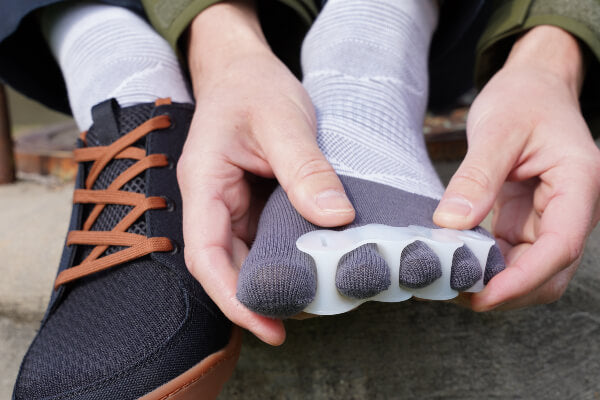
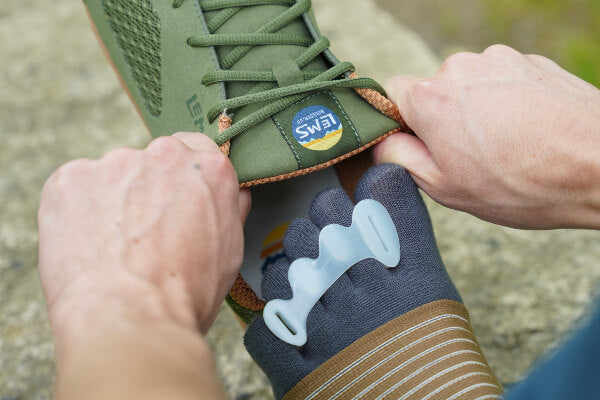
Giving serious consideration to your hiking footgear is crucial in ensuring a comfortable and pain-free trek. Indeed, the proper footgear (including minimalist footwear, toe spacers, toe socks, and appropriate foot pads) can make all the difference between an enjoyable, life-changing experience and a major sufferfest!
Finding and adopting wide toe box footwear is a particularly important consideration for hikers. Most footwear that is marketed as having a wide toe box includes ample width at the ball of the foot, yet it still tapers as it moves out toward the ends of the toes. We know that the widest part of the foot should be at the ends of the toes, so any footwear that does not accommodate this natural, splayed-toe configuration is going to impact the foot and toes in a negative way.
Other design elements that are commonly included in conventional hiking footwear, such as heel elevation and toe spring, can also contribute to foot and toe problems, such as bunions and hammertoes. To learn more about problematic shoe design elements (including hiking boot design elements), please check out this post from our Educational Articles blog. This article discusses what we believe constitutes a great hiking boot. To learn more about bunions and hammertoes and how footwear can impact these problems, our best recommendation is to sign up for our free email courses on these (and other) topics.
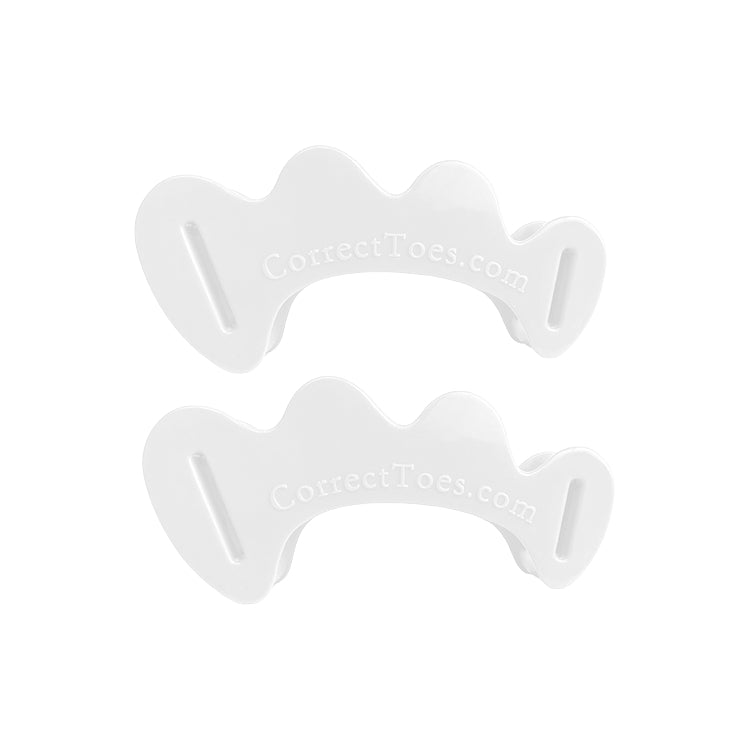
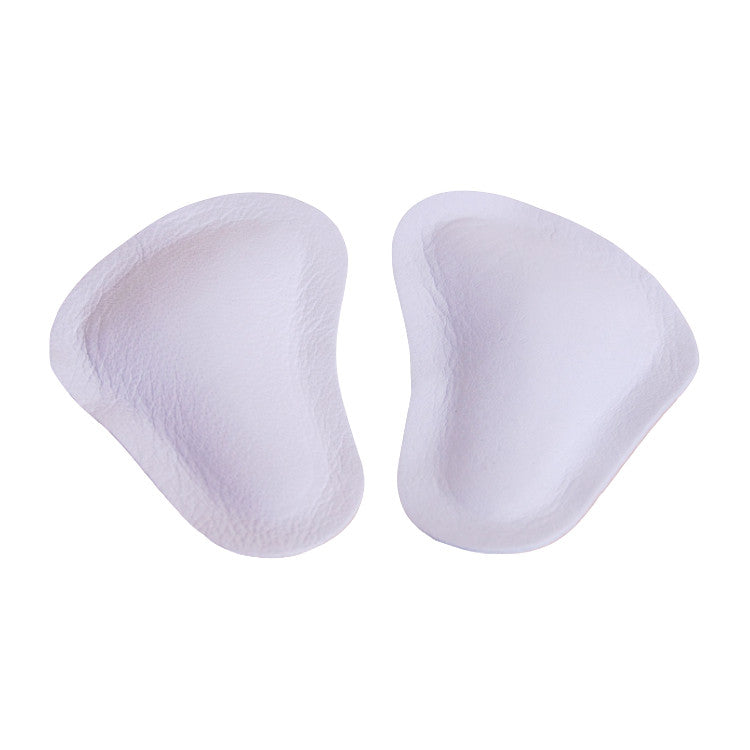
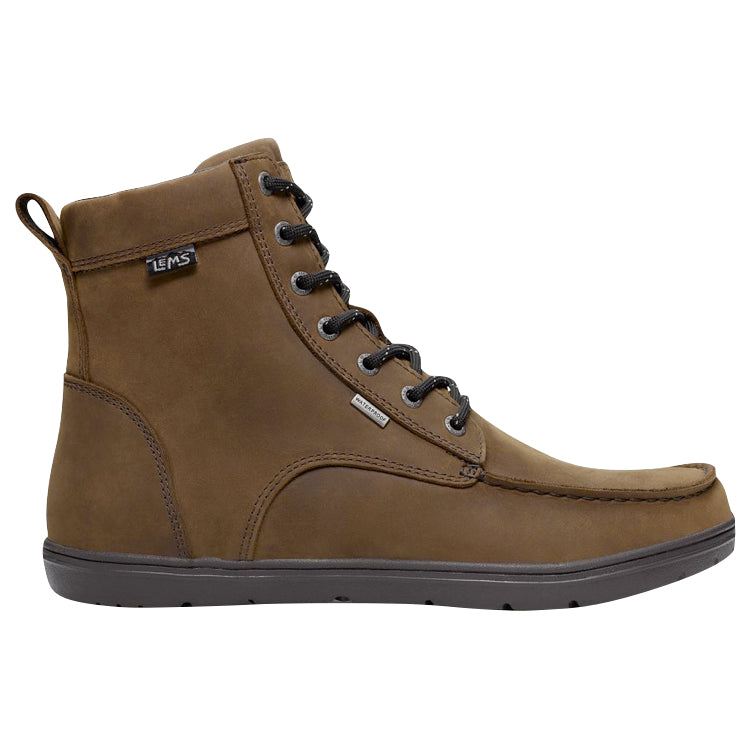
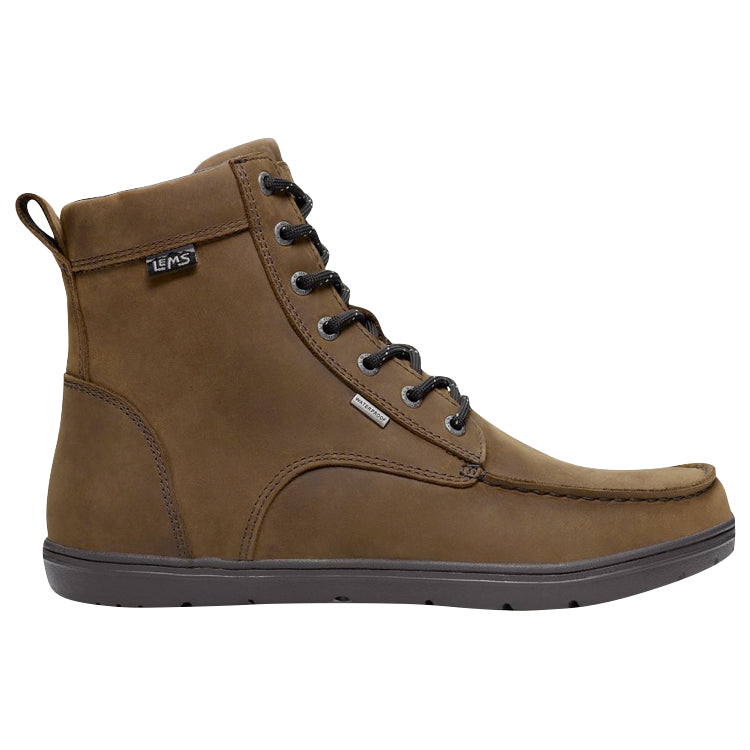
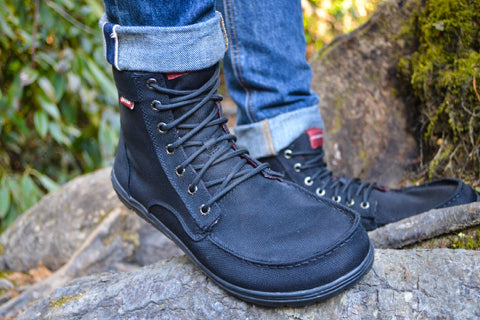
Two specific pieces of footgear that we’ve found beneficial for hiking include Lems Boulder Boots and Correct Toes toe spacers (you can find other great hiking footwear options here). We have personally used these products (in combination with Injinji toe socks and Pedag metatarsal pads) to hike the Annapurna Circuit in Nepal—a 2-3-week trek. We found this to be an excellent combination of footgear and got through the entire trek without any blisters, foot pain, knee pain, etc. Of course, everyone is a bit different in terms of how they respond to natural footgear, so it pays to give yourself some time before the trek (several months at least) to let your body adapt to this more minimalist-style boot and the other footgear as well.
Had it been available to us at the time, the one additional piece of footgear we would have brought with us on our Annapurna Circuit trek is winter traction aids. The boots were a little slippery on the snowy passes, but otherwise, traction on the trail was not an issue. With their multiple, ice-piercing spikes, the traction aids would have solved the slipping problem, as they perform really well in wintry conditions.
Hikers who may benefit most from using minimalist boots and other natural footgear include:
- Those who have full sensation in their feet and toes
- Those who can be patient with the process of natural foot rehabilitation
- Those who have at least some experience walking in minimalist footwear
- Those who still have some mobility left in the toes (i.e., the toes can still be manually—with the fingers—moved so that they are in line with their corresponding metatarsal bone and any crooked toes can be straightened out)
If this approach (i.e., using natural footgear) is the way you plan to go, we do suggest starting in with the gear as soon as you can to get acquainted with how everything feels and the adaptations that will occur in your feet and lower body. You may appreciate our article that discusses how best to transition to minimalist footwear if you do opt to go this route.

WANT TO IMPROVE YOUR FOOT HEALTH?
Let the team at Natural Footgear help you! Subscribe to our newsletter for the latest offers and helpful info, and sign up for our FREE email courses on various topics and foot health conditions.
Sign Up →
Want to Improve Your Foot Health?
We are here to help you every step of the way. Get our newsletter for the latest offers and helpful info, and sign up for our FREE email courses on various topics and conditions, including bunions, hammertoes, neuromas, plantar fasciosis, shin splints, ingrown toenails, and more.
Sign Up →


 Getting into a pair of men's or women's wide toe box shoes (specifically, shoes that are widest at the ends of the toes, not the ball of the foot) is vitally important in preventing additional toe deformities and in creating the circumstances that allow for true toe rehabilitation. So, a wide toe box shoe (which should also, ideally, possess a completely flat and flexible sole) is crucial in preventing a...
Read more
Getting into a pair of men's or women's wide toe box shoes (specifically, shoes that are widest at the ends of the toes, not the ball of the foot) is vitally important in preventing additional toe deformities and in creating the circumstances that allow for true toe rehabilitation. So, a wide toe box shoe (which should also, ideally, possess a completely flat and flexible sole) is crucial in preventing a...
Read more
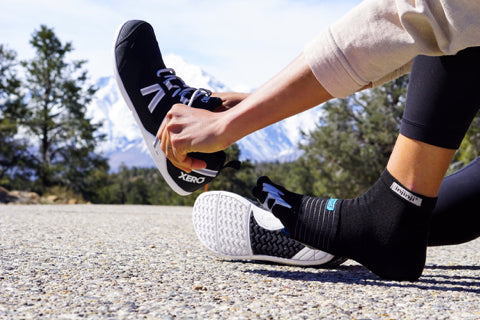

I am curious about your approach, and I’m in the process of learning as much as I can about it. As someone who loves being active outdoors (hiking, mostly), I have questions. The main one I’m curious about is how do you avoid foot fatigue when hiking in thin-soled shoes? Thanks!
Hi, Wes. Thank you for your great question! Foot fatigue in thin-soled footwear usually comes down to adaptation and function, not simply cushioning. Many modern hiking boots (and shoes) insulate the foot from the ground with thick midsoles and rigid structures, which can feel comfortable at first but also prevent the foot from doing the work it was designed to do. Thin-soled, flexible footwear takes a different approach: It allows the intrinsic muscles of the foot, the toes, and the arch to actively participate in balance, shock absorption, and propulsion. When those structures are allowed to move and strengthen over time, many hikers find that their feet actually become more resilient and less prone to fatigue, even over long miles. The key is transitioning gradually—shorter hikes at first, varied terrain, and paying attention to how your body responds.
Technique also matters. In thinner-soled footwear, hikers tend to naturally adopt a lighter, more attentive stride, placing the foot with a bit more care rather than pounding the ground. This often reduces impact and spreads the workload across the entire foot rather than concentrating it in the heel. A wide toe box that allows your toes to spread, combined with flexible soles that let your foot articulate with the terrain, can further improve stability and efficiency on the trail. Over time, as foot strength, mobility, and proprioception improve, many hikers find that the sensation of the ground beneath them becomes less fatiguing and more informative—helping them move through natural landscapes with greater balance, confidence, and endurance. We hope this info helps, Wes! Please let us know if you have any additional questions.
Yours in Foot Health,
Drs. Marty & Robyn Hughes